Email Us: pptinspections@hotmail.com
Call Us: (313) 399-7016

Lead-Based Paint Visual Assessments: The First Step in Identifying Potential Lead Hazards
Not every property requires immediate laboratory testing or specialized lead detection equipment. In many situations, a lead-based paint visual assessment serves as the first step in identifying conditions that may indicate potential lead hazards.
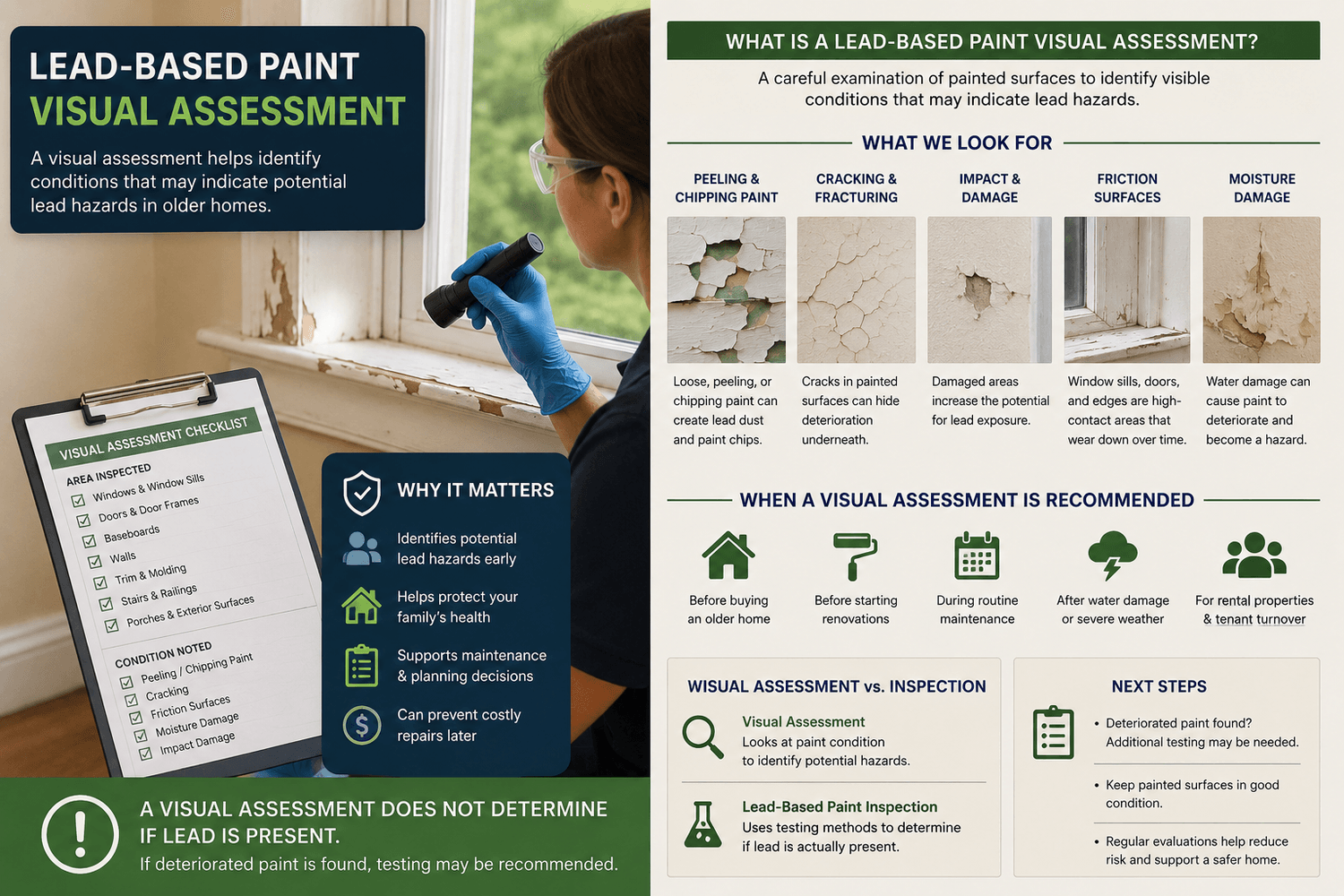
A visual assessment does not determine whether lead is present. Instead, it evaluates the condition of painted surfaces and identifies signs of deterioration that may require additional investigation.
For homes built before 1978, routine visual assessments can help property owners identify potential problems before they become more serious.
What Is a Lead-Based Paint Visual Assessment?
A lead-based paint visual assessment is a careful examination of painted surfaces throughout a property to identify visible conditions that may indicate lead hazards.
During the assessment, an inspector looks for signs such as:
Peeling paint
Chipping paint
Cracking paint
Flaking paint
Paint damage caused by moisture
Friction surfaces around windows and doors
Impact damage on walls and trim
These conditions may increase the likelihood that lead-contaminated dust or paint chips are being generated if lead-based paint is present.
Why Visual Assessments Matter
Many lead hazards begin with paint deterioration that is easily visible.
Regular visual assessments help property owners:
Identify maintenance issues early
Reduce the spread of deteriorating paint
Plan repairs before hazards become worse
Monitor the condition of older painted surfaces
Support routine property maintenance
Because lead poisoning often has no immediate symptoms, identifying deteriorating paint early can help reduce potential exposure.

When Should a Visual Assessment Be Performed?
A visual assessment is recommended when:
Purchasing an older home
Preparing a rental property for new tenants
Conducting routine property maintenance
Before beginning renovations
After severe weather or water damage
During annual property inspections
Properties built before 1978 benefit from regular inspections to ensure painted surfaces remain in good condition.
Visual Assessment vs. Lead-Based Paint Inspection
It's important to understand that a visual assessment is not the same as a lead-based paint inspection.
A visual assessment identifies visible paint conditions, while a lead-based paint inspection determines whether lead is actually present through specialized testing methods.
If deteriorated paint is observed during a visual assessment, additional testing may be recommended to determine whether lead-based paint is involved.
Protect Your Property Through Early Detection
Routine visual assessments are an important part of maintaining older homes. Identifying paint deterioration early allows homeowners and property managers to address potential issues before they become larger safety concerns.
At PPT Inspections, we help homeowners, landlords, contractors, and real estate professionals evaluate older properties and determine when additional lead testing may be appropriate.
Schedule Your Professional Home Inspection Today
Even new homes deserve a second look.
Contact PPT Inspections today to book your home inspection
Move in with confidence.
If you’d like to learn more, click the link below for more information.